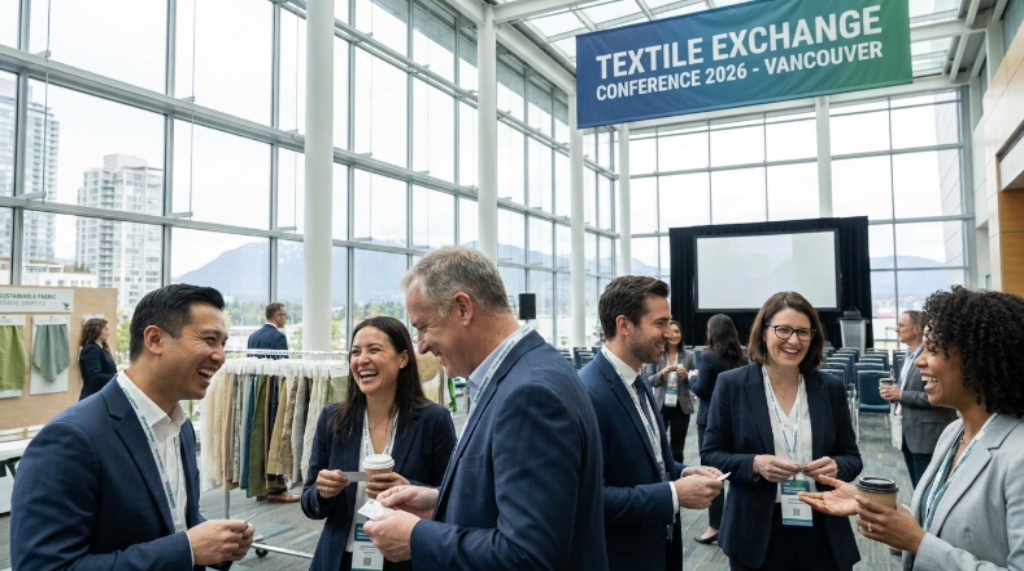
The fashion and textile industry is facing a defining moment. Climate pressures, supply chain challenges, and shifting consumer expectations are reshaping how materials are produced, sourced, and reused. The Textile Exchange Conference 2026 brings the people leading this change together in one place.
The event takes place from October 12 to 16, 2026, at the Vancouver Convention Center in Vancouver, Canada. Under the theme “The Implementation Era,” this year’s gathering focuses on scaling solutions that already work. Therefore, instead of simply discussing ideas, the conference centres on turning commitments into measurable progress across businesses, supply systems, and landscapes.
What Is the Textile Exchange Conference?
Textile Exchange is a global non-profit organisation working to drive positive change across the fashion and textile industry. Its mission focuses on responsible materials, supply chain transparency, and climate action. Each year, the organisation hosts its flagship conference, bringing together a wide range of voices from across the global textile ecosystem.
The conference is designed for three days of collective learning. It draws sustainability executives, brand leaders, material producers, fibre innovators, and supply chain experts. Additionally, the event welcomes NGOs, researchers, and policymakers who shape the regulatory landscape surrounding textile production.
Unlike a typical trade show, the Textile Exchange Conference is built around shared learning and collaboration. Attendees do not just showcase products. Instead, they exchange insights, confront shared challenges, and explore practical pathways toward more sustainable material systems. This makes the event particularly valuable for anyone working on sustainability strategy within the fashion and textile sector.
Dates, Venue and Location
The Textile Exchange Conference 2026 runs from Monday, October 12, to Friday, October 16, 2026. The venue is the Vancouver Convention Center, one of the most recognised conference facilities on the west coast of North America.
Vancouver offers an inspiring backdrop for a conference centred on climate and sustainability. The city is known for its commitment to environmental policy, its access to nature, and its strong culture of innovation. Additionally, its position as a gateway between Asia and North America makes it accessible for an international audience travelling from across the textile supply chain.
The conference also acknowledges the land on which it takes place. The event is held on the unceded territories of the xʷməθkʷəy̓əm (Musqueam), Sḵwx̱wú7mesh (Squamish), and səlilwətaɬ (Tsleil-Waututh) Nations. Textile Exchange recognises the strength, endurance, and resilience of these communities and expresses solidarity with them throughout the event.
The Theme: The Implementation Era
Every year, the Textile Exchange Conference adopts a theme that reflects the current state of the industry. For 2026, that theme is The Implementation Era.
This theme marks a shift in focus. In recent years, much of the conversation around sustainable fashion centred on setting goals, making commitments, and building awareness. However, external pressures are changing rapidly, and many organisations are now moving from reactive responses toward consistent, embedded action. Therefore, the 2026 conference asks a more practical question: how do we scale what already works?
The agenda is rooted in the realities faced by those actually delivering change. This includes sustainability executives navigating corporate strategy, as well as material producers working directly with farmers, manufacturers, and recyclers. Additionally, the conference is guided by the launch of new action pathways from Textile Exchange. These pathways support the adoption of preferred cropping systems, recycling processes, and responsible animal material production.
In short, the Implementation Era theme reflects a maturing industry. The focus has moved from “what should we do” to “how do we actually do it, at scale, across complex global systems.”
Climate Action at the Centre of the Conversation
Climate change is not a side topic at this conference. It sits at the very centre of the discussion. Global climate and nature commitments are placing increasing pressure on the textile industry to demonstrate real progress, not just intentions.
Sourcing decisions play a major role here. When it comes to materials, supporting and investing in preferred production systems can deliver both business value and supply resilience. This is especially important in a world facing growing uncertainty around weather patterns, resource availability, and regulatory change.
The conference explores how climate goals translate into day-to-day decisions. For example, choosing recycled or regenerative materials affects emissions, land use, and water consumption. Additionally, supply chain transparency tools help companies measure and report their climate impact more accurately. Therefore, climate action at this event is treated as something operational, not aspirational.
Fashion Innovation: Materials, Technology and New Systems
While climate action provides the urgency, innovation provides the pathway forward. The Textile Exchange Conference 2026 showcases the latest developments in materials science, recycling technology, and production systems across the fashion and textile industry.
Innovation at this event covers several key areas. Preferred fibres and materials, including organic, recycled, and regenerative options, remain a central focus. Additionally, manmade cellulosics, biosynthetics, and next-generation materials continue to gain attention as alternatives to conventional synthetics.
Recycling technology is another major theme. As circularity becomes a core expectation rather than a niche goal, the conference highlights systems that allow textile waste to become a resource rather than a problem. This includes mechanical and chemical recycling approaches, as well as the infrastructure needed to collect and sort textile waste at scale.
Animal fibres and materials, including wool, down, leather, and alpaca, are also part of the innovation conversation. Responsible production systems for these materials remain an important part of a balanced and resilient materials portfolio. Standards and certification frameworks help ensure these materials meet defined environmental and animal welfare criteria.
Who Attends the Textile Exchange Conference?
The conference attracts a genuinely diverse audience from across the global textile ecosystem. Attendees include sustainability managers and executives from major fashion brands, as well as smaller and emerging companies working on responsible sourcing.
Material producers and fibre innovators also play a significant role. These are the organisations developing and supplying the raw materials that will shape the industry’s future. Additionally, supply chain and traceability experts attend to discuss how transparency tools and technologies are evolving.
NGOs and civil society organisations bring an important external perspective. Their presence ensures that conversations about sustainability remain grounded in real-world environmental and social impact, rather than purely commercial considerations.
Finally, researchers and policymakers attend to share how regulatory frameworks are evolving. With sustainability regulations advancing rapidly in regions such as the European Union, understanding the policy landscape is increasingly important for any organisation operating across global supply chains.
Conference Format: Learning, Dialogue and Collaboration
The Textile Exchange Conference is structured around collective learning. Rather than one-directional presentations, the format encourages dialogue and exchange between participants from different parts of the supply chain.
Roundtable dialogues form an important part of the programme. These breakout sessions focus on supply chain collaboration and innovation, allowing smaller groups to explore specific challenges in greater depth. This format works well for topics that require nuance, since participants can ask questions and share experiences directly.
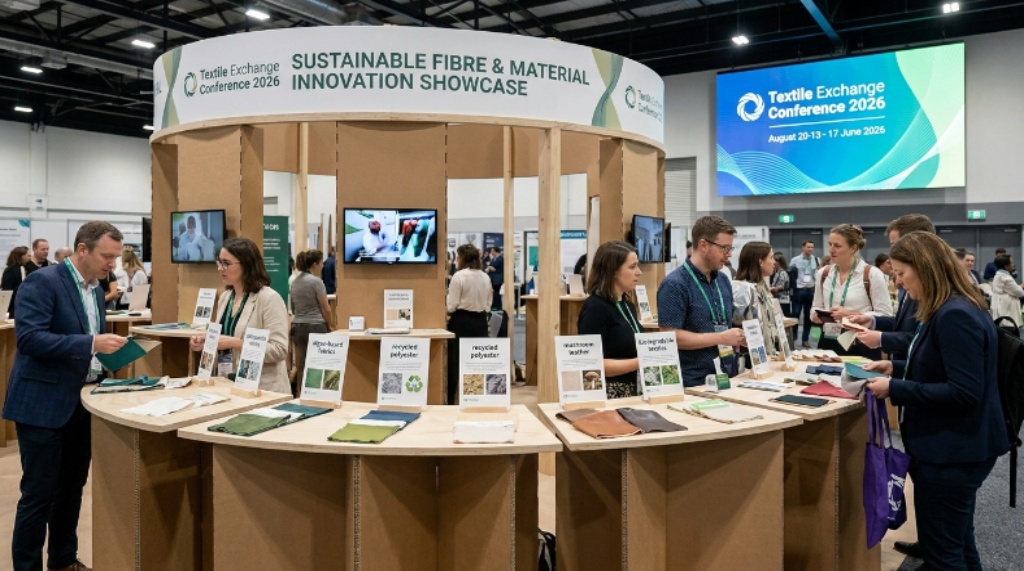
An innovation showcase highlights cutting-edge fibres, tools, and technologies. This gives attendees a chance to see emerging solutions firsthand and consider how they might apply within their own organisations or supply chains.
Additionally, the conference provides space for informal networking. Many valuable connections form outside of formal sessions, particularly among professionals working on similar sustainability challenges in different regions or sectors. With delegates expected from countries including the United States, the Netherlands, the United Kingdom, Bangladesh, Germany, India, and Australia, the conference offers a genuinely international perspective on shared challenges.
Why Vancouver Is a Fitting Host City
Choosing a host city for a climate-focused conference is never accidental. Vancouver brings several qualities that align closely with the goals of the Textile Exchange Conference 2026.
The city has a strong reputation for environmental leadership. Its policies around sustainability, green building, and urban planning reflect many of the same principles the conference promotes within the textile industry. Therefore, attendees are surrounded by examples of climate-conscious urban design throughout their visit.
Additionally, Vancouver’s natural surroundings serve as a constant reminder of what is at stake. Mountains, forests, and coastline frame the city, offering a tangible connection to the landscapes that climate action ultimately aims to protect.
From a practical standpoint, the Vancouver Convention Center is a modern, well-equipped venue suited to large international gatherings. Its location also makes it accessible for attendees travelling from across North America, Europe, and Asia, supporting the global nature of the conference audience.
How to Prepare for the Conference
For first-time attendees, a few simple steps can make a significant difference to the overall experience. The conference covers a broad range of topics, so preparation helps attendees focus on what matters most to their work.
- Review the published agenda in advance and identify sessions most relevant to your role, whether that is sourcing, sustainability strategy, or product innovation.
- Familiarise yourself with Textile Exchange’s action pathways before arriving, since these frameworks guide much of the 2026 programme.
- Plan your travel and accommodation early, as Vancouver can become busy during major conference weeks.
- Bring specific questions or challenges from your own organisation. The roundtable format works best when participants contribute real examples.
- Set networking goals. With delegates from many countries and sectors, identifying a few key connections in advance can lead to more productive conversations.
- Allow time to explore the innovation showcase, where some of the most forward-looking ideas in the industry are presented.
Conclusion
The Textile Exchange Conference 2026 represents a pivotal moment for the fashion and textile industry. Taking place from October 12 to 16 at the Vancouver Convention Center, the event brings together brands, material producers, sustainability experts, NGOs, and policymakers under the theme The Implementation Era. The focus has shifted from setting goals to delivering measurable progress, guided by new action pathways covering preferred cropping, recycling, and responsible animal material systems. With climate action and fashion innovation woven through every part of the programme, the conference offers a rare opportunity to connect strategy with practical, on-the-ground solutions. For anyone working to build a more sustainable and resilient textile industry, this event offers both inspiration and a clear path toward implementation.
Frequently Asked Questions (FAQs)
When and where does the Textile Exchange Conference 2026 take place?
The conference runs from Monday, October 12, to Friday, October 16, 2026, at the Vancouver Convention Center in Vancouver, Canada. The event is held on the unceded territories of the Musqueam, Squamish, and Tsleil-Waututh Nations.
What is the theme of the Textile Exchange Conference 2026?
The 2026 theme is The Implementation Era. It focuses on scaling sustainable practices that already work across businesses, supply systems, and landscapes, moving the industry from setting goals toward delivering measurable, embedded progress.
Who should attend the Textile Exchange Conference?
The conference is designed for sustainability executives, brand and sourcing professionals, material and fibre producers, supply chain and traceability experts, NGOs, civil society organisations, researchers, and policymakers across the global fashion and textile industry.
What topics are covered at the conference?
Key topics include responsible material sourcing, recycled and regenerative fibres, circular economy practices, supply chain transparency, climate action, and responsible production of animal-derived materials such as wool, down, and leather. The agenda also covers new action pathways for preferred cropping and recycling systems.
How can I get tickets for the Textile Exchange Conference 2026?
Tickets can be purchased through the official Textile Exchange Conference 2026 event registration page. Early registration is recommended, as the event attracts a large international audience and accommodation in Vancouver may become limited closer to the dates.