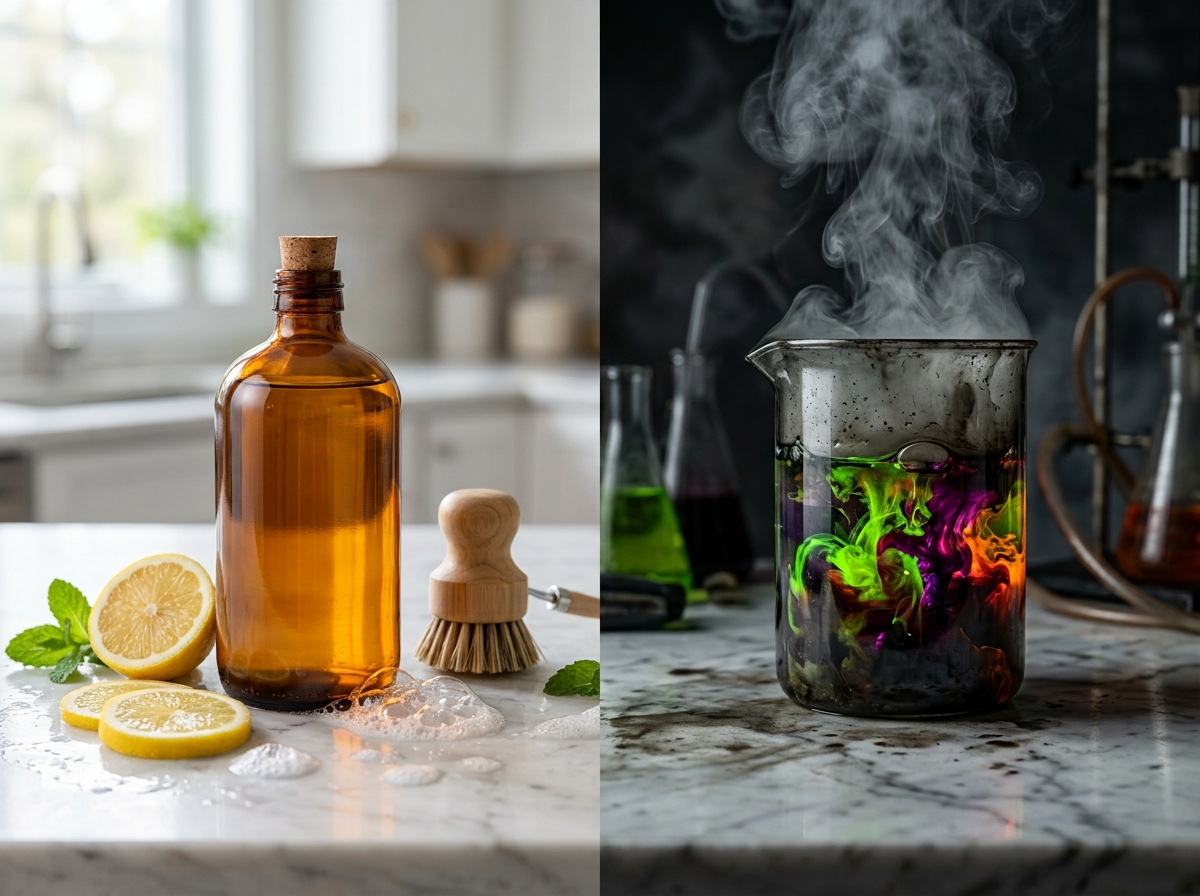
A dish soap ingredient list can look like a chemistry exam. One bottle may contain surfactants, preservatives, fragrance components, viscosity modifiers, salts, pH adjusters, and processing aids—each with a different job. The easy response, as noted in ingredient breakdowns by EcoFriendlyParty.com, is to search for a list of “toxic” ingredients and cross out everything that sounds unfamiliar.
That approach is tempting, but it can be misleading.
A better question is: which ingredients deserve closer attention, why manufacturers use them, and what evidence should influence your decision? That method helps you avoid both unnecessary exposure concerns and genuine formulation red flags.
If you are researching products while working on
There Is No Universal “Bad Ingredient” List
Cleaning products function as formulated systems. An ingredient can have a hazard in isolation but present very little practical concern at the concentration and exposure route associated with normal use. Conversely, a low-concentration ingredient can matter if it acts as a strong sensitizer or if sensitive users apply the product frequently.
That is why responsible label reading considers function, concentration when available, exposure, and credible safety criteria.
EPA Safer Choice is a useful model. Its standard evaluates ingredients within functional classes and considers human-health and environmental characteristics rather than simply banning every ingredient with a complicated name.
For consumers, the lesson is not “never worry about ingredients.” It is “worry intelligently.” Look for transparency, evidence, and relevant certifications instead of relying on a viral blacklist.
1. Fragrance: Worth Checking if You Want Maximum Transparency
Fragrance is one of the first label categories many shoppers notice because it can represent a complex mixture. Some people prefer fragrance-free dish soap because fragrances can trigger irritation or sensitivity, while others simply want fewer unnecessary ingredients.
The key issue is transparency. A product that clearly discloses fragrance components gives consumers more information than one that provides only a generic scent description.
Plant-derived fragrance is not automatically allergy-free. Essential oils can contain naturally occurring fragrance allergens such as limonene. Seventh Generation’s current scented dish liquid pages, for example, identify fragrance ingredients and note specific fragrance allergens.
If you are sensitive to fragrance, choose a fragrance-free formulation rather than assuming “natural scent” will be gentler.
2. Preservatives: Do Not Judge Them by the Name Alone
Liquid dish soap contains a lot of water, which means preservation is often necessary to control microbial growth during storage and use. The question is not whether a product contains a preservative; it is which preservative, at what concentration, and under what safety standard.
People with known preservative sensitivities should pay particular attention to isothiazolinones, such as methylisothiazolinone and benzisothiazolinone, because experts recognize them as contact allergens. That does not mean every person will react to a dish soap containing one, but it makes ingredient disclosure especially useful.
This is another place where a simplistic “chemical-free” message fails. Water-based cleaning products generally need some strategy for product stability. Removing a preservative without replacing its function can create a different safety problem.
If you are choosing a dish soap for sensitive skin, ingredient transparency and a fragrance-free, sensitizer-conscious formula may be more useful than searching for the word “natural.”
3. Sulfates: Understand the Specific Ingredient
Beauty sites frequently put sulfates on “avoid” lists, but the category is too broad for a useful yes-or-no rule.
Sodium lauryl sulfate, for example, acts as an effective surfactant that removes oils and creates lather. It can be irritating for some people at sufficient exposure, but its presence does not by itself tell you the overall safety or environmental profile of a finished dish soap.
It is also important to distinguish sodium lauryl sulfate from sodium laureth sulfate and from the many other sulfate or sulfonate surfactants used in cleaning products. Their chemistry and formulation roles are not identical.
If your priority is environmental impact, examine the surfactant’s biodegradation and aquatic-toxicity profile. If your priority is skin sensitivity, consider the finished product and your own response. One ingredient name cannot answer both questions.
4. Phosphates: A More Direct Environmental Concern
Phosphorus compounds can contribute to nutrient pollution when present in wastewater at elevated levels. Excess nutrients can fuel algal growth and contribute to oxygen depletion in water bodies.
EPA recommends choosing phosphate-free soaps and detergents as part of reducing nutrient pollution. This is a useful example of an ingredient category where environmental context matters more than fear-based language.
Do not confuse phosphates with every ingredient containing the letters “phos.” Cleaning formulations can contain different phosphorus-containing chemicals with different functions and environmental profiles. Look at the actual ingredient and the manufacturer’s information.
For a household trying to reduce environmental impact, phosphate-free is a practical attribute to prioritize, especially where local regulations or watershed concerns make nutrient reduction important.
5. Triclosan and Antibacterial Additives: Ask Whether You Need Them
For ordinary dishwashing, antibacterial additives are often unnecessary. The primary goal of hand dishwashing is to remove food, grease, and soil, not to turn the sink into a sterilization chamber.
Septic guidance from the University of Minnesota specifically recommends avoiding antibacterial soaps because they can harm beneficial microorganisms in septic systems.
If you have a specific sanitizing requirement, follow food-safety guidance and use a product intended for that job. But do not assume that “antibacterial” automatically means “cleaner” or “safer.”
The more useful consumer question is: what function does this ingredient perform, and do I actually need that function in my routine?
6. Dyes: Usually a Low-Priority Ingredient
Colorants can make a product look attractive, distinguish scents, or reinforce branding, but they do not normally perform the main cleaning function.
If you are trying to simplify a formula, choosing an undyed dish soap is reasonable. But compared with factors such as surfactant selection, fragrance sensitivity, preservation, packaging, dose, and environmental certification, dye is often a lower-priority concern.
This is an important lesson for ingredient lists: not every avoidable ingredient has the same importance. A good shopping strategy ranks concerns instead of treating every additive as equally problematic.
7. “Natural” Fragrance and Essential Oils
Essential oils can sound automatically safer than synthetic fragrance, but “natural” is not a synonym for non-irritating.
Citrus, mint, lavender, and other essential oils contain many volatile compounds. Some can be fragrance allergens. If you have sensitive skin or prefer a minimal formula, a fragrance-free dish soap may be a better choice than simply switching from synthetic fragrance to essential oils.
Again, the goal is not to demonize a category. It is to match the formulation to your needs and recognize that plant-derived materials can have real biological activity.
What About “Chemical-Free” Dish Soap?
Chemicals make up every substance in dish soap. Water is a chemical. Citric acid is a chemical. Sodium chloride is a chemical.
The phrase “chemical-free” therefore tells you almost nothing useful about a cleaning product. A credible product description should instead identify specific attributes: fragrance-free, dye-free, phosphate-free, EPA Safer Choice certified, readily biodegradable under a stated test method, or made with a stated percentage of bio-based content.
The FTC’s Green Guides also caution against broad environmental claims that imply more than the evidence supports. Specific claims are easier for consumers to understand and verify.
How to Read a Dish Soap Ingredient List
Use a five-step method.
First, identify the surfactants. These are the main cleaning agents.
Second, identify preservatives. If you are sensitive to specific preservatives, this is where your personal screening matters most.
Third, check fragrance disclosure. If the label uses a broad fragrance term, see whether the manufacturer provides additional details online.
Fourth, look for functional additives such as pH adjusters, chelating agents, salts, or viscosity modifiers. Their presence does not automatically cause a problem; it shows that someone engineered the formula rather than just making soap.
Fifth, look for independent standards. EPA Safer Choice, for example, provides a more meaningful signal than vague claims such as “green” or “clean.”
What a Real Product Label Can Teach You
Seventh Generation’s current dish liquid is a useful case study because its product pages identify individual ingredients and their functions. A current scented formula lists plant-derived cleaning agents, glycerin, citric acid, mineral-based ingredients, synthetic processing aids, synthetic preservatives, and plant-derived fragrance components.
That level of disclosure helps consumers make decisions based on their own priorities. Those sensitive to preservatives may want to focus directly on the preservative list. If you are avoiding fragrance, choosing a fragrance-free option is best. Meanwhile, shoppers prioritizing environmental impact can look for the EPA Safer Choice credential.
The label is more important than the brand: a transparent label lets you ask better questions. A vague label forces you to guess.
A Priority List for Safer, More Transparent Shopping
If you do not want to research every ingredient, prioritize your concerns.
High priority for many households:
• Full ingredient disclosure.
• Fragrance transparency or fragrance-free options.
• Sensitizer awareness if you have known allergies.
• Phosphate-free formulation.
• Credible environmental or safety certification.
• Appropriate surfactant and preservative information.
Medium priority:
• Dyes and colorants.
• Packaging additives.
• Marketing claims about natural origin without supporting evidence.
Always contextualize your choices. A person with eczema may prioritize fragrance and known allergens. A septic-system owner may prioritize harsh disinfectants, antibacterial additives, phosphorus, and dose. An environmental shopper may focus on aquatic toxicity, biodegradation, packaging, and refillability.
Conclusion
What ingredients should you avoid in dish soap? The most useful answer is not a dramatic blacklist. Pay particular attention to ingredients or categories that are relevant to your specific concern: fragrance allergens and preservatives for sensitive skin, phosphates for nutrient pollution, unnecessary antibacterial additives for routine washing and septic care, and opaque formulations that make meaningful evaluation impossible.
Just as important, do not confuse unfamiliar chemistry with dangerous chemistry. Cleaning products need ingredients that perform technical functions. The goal is a well-designed formula with transparent information and evidence behind its safety and environmental claims.
Next time you buy dish soap, flip the bottle over. Identify the surfactants, preservatives, fragrance, and certifications. Then choose based on your actual priorities—not a viral list of ingredients to fear.
Frequently Asked Questions
Should I avoid all sulfates in dish soap?
Not necessarily. Different sulfate and sulfonate surfactants have different properties. Evaluate the specific ingredient, its role, the finished formulation, and your personal sensitivity.
Is methylisothiazolinone bad in dish soap?
It is a known contact allergen and may be worth avoiding if you are sensitive to it. For other consumers, the appropriate assessment depends on concentration, exposure, and the finished product.
Are essential oils safer than synthetic fragrance?
Not automatically. Essential oils can contain fragrance allergens. If you want the lowest fragrance exposure, fragrance-free is the more direct choice.
Are phosphates harmful in dish soap?
Phosphorus can contribute to nutrient pollution when released into waterways in excess. EPA recommends phosphate-free soaps and detergents as one way to reduce nutrient pollution.
What is the best way to choose a non-toxic dish soap?
Look for full ingredient disclosure, credible safety or environmental certification, a formula suited to your sensitivities, and specific substantiated claims rather than broad “chemical-free” marketing.
Call to Action
Ready to make a smarter switch? Compare the dish soap you use now with the checklist in this guide, verify the ingredients and environmental claims, and choose the option that best fits your household. If this guide helped you, share it with someone who is trying to reduce waste, improve cleaning-product choices, or make their kitchen routine more sustainable.
Research & Editorial Notes — Remove Before Publication
Competitor information gap addressed:
Competitors often publish alarm-style ingredient blacklists that imply every sulfate, preservative, or fragrance is inherently toxic. This article replaces that with a function-and-evidence framework, distinguishes hazard from exposure, and explains why complete ingredient disclosure and credible standards are more useful than viral “chemical-free” lists.
The article intentionally avoids unsupported absolutes and uses specific, verifiable criteria instead of fear-based ingredient lists or generic greenwashing language.