Every October, millions of Americans have a reason to step outside, slow down, and reconnect with the natural world. National Wildlife Refuge Week is the country’s annual celebration of its most important conservation network. In 2026, the celebration runs from October 10 to 17, and the entire month of October offers visitors across the United States a rich calendar of free events, guided walks, birdwatching programs, and outdoor activities at refuges in every state.
Whether you are a first-time visitor or a returning outdoor enthusiast, this guide has everything you need to plan your visit, understand the schedule, and make the most of October at a national wildlife refuge near you.
What Is National Wildlife Refuge Week?
National Wildlife Refuge Week is observed every year during the second full week of October. It celebrates the National Wildlife Refuge System, the great network of public lands and waters managed by the U.S. Fish and Wildlife Service (FWS) for the conservation and restoration of fish, wildlife, and plant resources. The celebration began with a presidential proclamation in 1995 and has grown steadily ever since.
The Refuge System is remarkable in scale. It includes 570 national wildlife refuges and 38 wetland management districts covering 95 million acres of land across all 50 states and five territories. The system pumps $3.2 billion per year into regional economies and supports more than 41,000 jobs. Almost 500 refuges and wetland management districts are open to the public year-round, and the majority offer free admission on every day of the year.
Additionally, national wildlife refuges serve a purpose unlike any other category of public land. Wildlife conservation is their primary mission. Everything from trail placement to seasonal access schedules is designed to keep wildlife habitat healthy and productive for present and future generations.
2026 Key Dates at a Glance
| Date | Event |
| Saturday, October 10 | Urban Wildlife Conservation Day – week kicks off |
| Sunday, October 11 | Free admission day at all fee-charging refuges |
| October 10 – 17 | National Wildlife Refuge Week 2026 |
| Throughout October | Walk for the Wild 5K events across the country |
| October 1 – 31 | Fall migration season – peak wildlife viewing month |
| October 14 | Wings Over Water Festival birding events (North Carolina) |
Urban Wildlife Conservation Day: October 10
The week begins on Saturday, October 10, with Urban Wildlife Conservation Day. This day specifically honors the 101 national wildlife refuges located in and near cities across America. These urban refuges play a unique role. They bring nature to millions of people who may not have easy access to remote wilderness areas. They provide clean air, flood buffering, and green space in dense metropolitan environments.
Urban wildlife refuges offer a powerful entry point for first-time visitors. Many are within a short drive or even a short walk of city centers. If you live near a major metropolitan area, there is a very good chance a refuge is closer than you think. The FWS website at fws.gov allows you to search for the nearest refuge by zip code.
Free Admission Day: October 11
On Sunday, October 11, every national wildlife refuge that normally charges an entrance fee will waive that fee for the day. This is one of the best opportunities of the year to visit a refuge without any cost at all. It is worth noting that the majority of refuges across the country already offer free admission year-round. However, some of the most popular and well-developed refuges do charge a nominal entrance fee. October 11 removes that barrier entirely.
Therefore, if you have been curious about a nearby refuge but hesitated because of cost, this is the day to go. Bring the whole family. The only investment is your time and a pair of comfortable shoes.
Walk for the Wild: A National 5K Tradition
One of the most popular recurring features of National Wildlife Refuge Week is the Walk for the Wild program, organized in partnership between the U.S. Fish and Wildlife Service and the Public Lands Alliance. The program has grown year over year, with more than 35 to 40 free walking events held at refuges across the country each year during the week.
Participants walk a suggested 5K, or 3.1 miles, through a wildlife refuge. Some events are in-person guided walks led by refuge rangers or conservation volunteers. Others are self-guided, allowing participants to choose their own pace and route. A virtual participation option is also available for people who live far from a refuge or cannot attend in person, allowing them to walk a local park or trail while supporting the national program.
To find a Walk for the Wild event near you, visit the official FWS website or the Public Lands Alliance page as the week approaches. Events are added throughout September and early October, so it is worth checking back regularly.
You can also share your walk on social media using the hashtags WalkForTheWild, WildlifeRefuge, and SupportTheWild to connect with participants across the country and raise awareness for the conservation mission of the Refuge System.
What Happens at Refuges During the Week
Each refuge designs its own program of events for National Wildlife Refuge Week. Events vary by location, season, and the specific wildlife and habitat at each site. However, across the country, visitors can expect a consistent range of activities and programming.
Guided Nature Walks and Ranger-Led Hikes
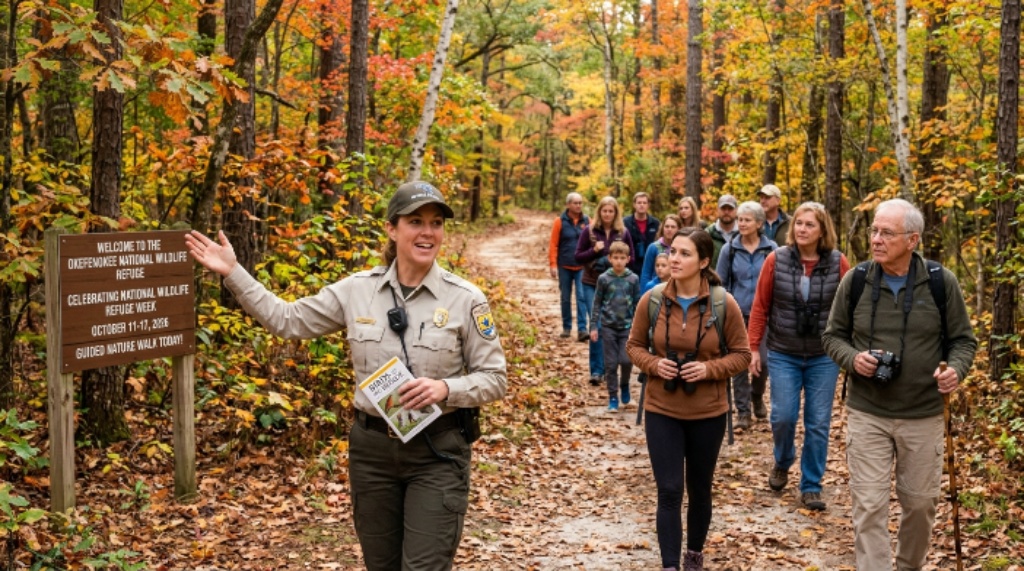
Most refuges that offer programming during the week host guided walks led by refuge rangers, wildlife biologists, or trained volunteer naturalists. These walks introduce visitors to the specific wildlife, plants, and habitat features of the refuge. They are usually free, open to all ages, and scheduled for the early morning or late afternoon when wildlife is most active.
At Great Swamp National Wildlife Refuge in New Jersey, for example, guided sunset walks during the week allow visitors to watch flocks of migrating ducks descend into refuge pools for the night. Events like this are only possible because of the careful habitat management that refuges provide year-round.
Birdwatching and Wildlife Photography Programs
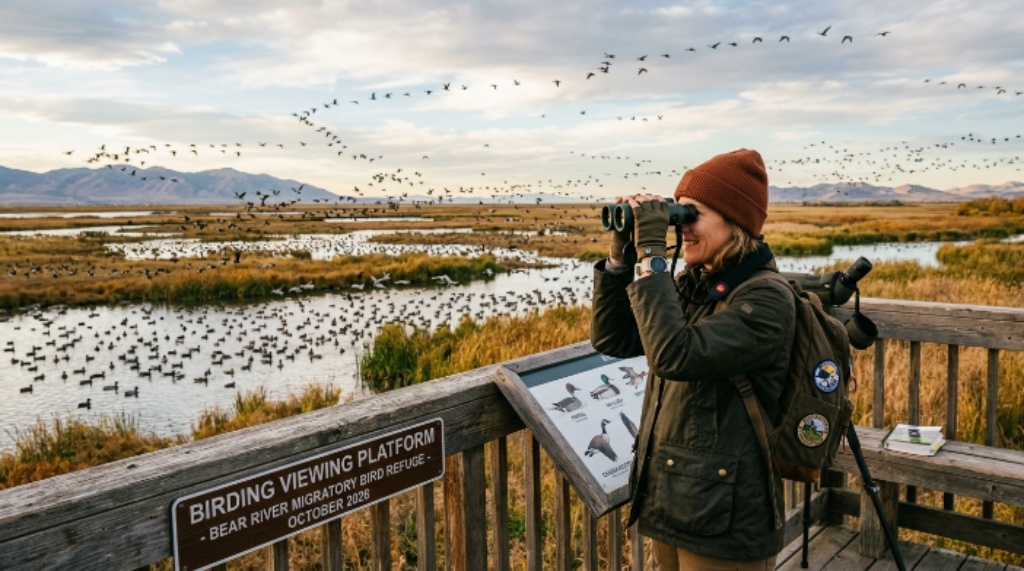
October is peak fall migration season across much of the United States. Millions of birds move south along traditional flyways during this month, and national wildlife refuges sit at the heart of these migration corridors. This makes the week an ideal time to observe waterfowl, raptors, shorebirds, and songbirds in numbers that simply cannot be found elsewhere.
Many refuges offer dedicated photography programs during the week. These sessions teach participants how to photograph wildlife responsibly and ethically, using photography blinds, viewing platforms, and vehicle-based observation to minimize disturbance to the animals. Bring your camera, a telephoto lens if you have one, and binoculars.
Educational Exhibits and Conservation Talks
Conservation partners and wildlife biologists often set up exhibits at refuges during the week. Topics include endangered species, illegal wildlife trade, invasive species management, and habitat restoration. Visitors can speak directly with the scientists and land managers doing this work. These conversations offer insights that no documentary or website can fully replicate.
At Kilauea Point National Wildlife Refuge in Hawaii, for example, past Refuge Week programming has included talks from FWS biologists about endangered species and international wildlife trade conventions, with real seized wildlife products on display.
Youth and Family Programs
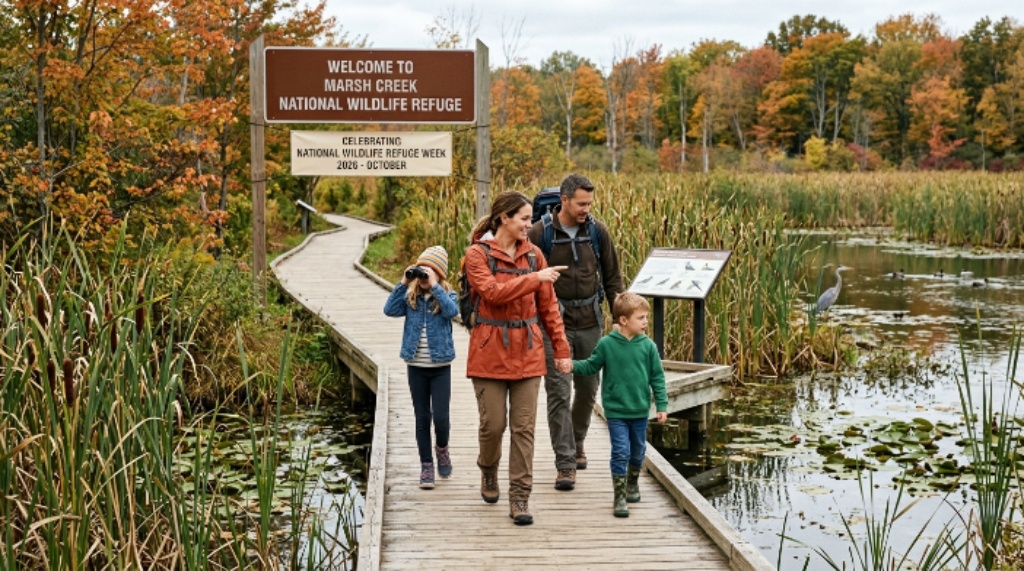
National wildlife refuges are committed to connecting young people with the natural world. Youth programs during the week include bluebird box building workshops, junior ranger activities, nature scavenger hunts, and loaner backpack programs that provide families with binoculars, field guides, and activity materials at no cost. These programs are designed to make a first refuge visit accessible and enjoyable for children of all ages and ability levels.
Hunting and Fishing
National wildlife refuges are not wilderness reserves closed to human use. The Refuge System is specifically designed to allow compatible recreational activities, including hunting and fishing, where they align with conservation goals. October is one of the prime months for waterfowl hunting and sport fishing at many refuges across the country. Station-specific regulations govern what is permitted at each location, and permits or licenses are required for most hunting and fishing activities. Check the specific refuge website for current rules before you go.
October 2026: The Best Month to Visit a Refuge
The entire month of October 2026 offers outstanding conditions for visiting a national wildlife refuge. Fall migration is in full swing from early October through month’s end. Here is what to expect at different refuge types across the country.
| Refuge Type | October Highlights |
| Wetland refuges | Migrating ducks, geese, and shorebirds by the thousands |
| Coastal refuges | Tundra swans, snow geese, and raptors on the Atlantic Flyway |
| Prairie refuges | Sandhill cranes staging for migration, bison herds visible |
| Mountain refuges | Elk in rut, fall foliage at peak, clear air for wildlife viewing |
| Urban refuges | Monarch butterflies, migratory songbirds, raptors overhead |
October to December is the best period to see migratory waterfowl at refuges such as Loess Bluffs in Missouri, which hosts spectacular concentrations of snow geese, ducks, and bald eagles as the season progresses. Additionally, refuges along the Atlantic coast see major concentrations of birds during this month, with some sites hosting tens of thousands of waterfowl in a single day.
Wings Over Water Festival: October 14, 2026
The Wings Over Water Festival in North Carolina runs during Refuge Week and features guided birding events at national wildlife refuges in the eastern part of the state. On October 14, 2026, participants can join an all-day birding trip led by expert leaders to observe wading birds, ducks, sparrows, warblers, and raptors at some of the Southeast’s most productive refuge habitats. These events cost $25 and require advance registration. They are a tremendous value for serious birders looking for expert guidance and access to prime locations.
Practical Visitor Guide: How to Make the Most of Your Trip
A little preparation makes a significant difference when visiting a national wildlife refuge. These practical tips come directly from the U.S. Fish and Wildlife Service and experienced refuge visitors.
- Check the specific refuge website before you go. Each refuge has its own hours, access rules, permit requirements, and event calendar. Not every refuge is open every day, and some areas have seasonal or permitted access only.
- Use the FWS refuge finder at fws.gov to locate the nearest refuge and find its contact information and event listing.
- Check iNaturalist and eBird in advance to see what species have been spotted at your chosen refuge recently. This helps you focus your visit and set realistic expectations.
- Dawn and dusk are the best times to see wildlife at most refuges. Plan your arrival accordingly.
- Bring binoculars, a camera, water, sunscreen, and insect repellent. Dress in layers appropriate for October weather, and wear comfortable, closed-toe shoes suited to unpaved trails.
- Stay on designated trails and do not approach or feed wildlife. The quieter and more patient you are, the more you will see.
- Auto tour routes are available at many refuges and allow visitors to observe wildlife from the comfort of their vehicle. Your car acts as a natural blind and often allows closer views than on foot.
- Dogs are welcome at many refuges on designated trails, but must remain on a leash no longer than six feet. Check individual refuge rules in advance.
- Register for Walk for the Wild events early, as space at in-person events is often limited.
The Economic and Conservation Impact of the Refuge System
National wildlife refuges do far more than protect habitat. They anchor regional economies across America. The Refuge System generates $3.2 billion in economic activity each year and supports more than 41,000 jobs in surrounding communities. Hunting, fishing, birdwatching, photography, and nature tourism all contribute to local economies in ways that are directly tied to the health of the refuges themselves.
Additionally, refuges provide clean water, flood buffering, and carbon storage services that benefit millions of Americans who may never set foot inside a refuge boundary. These ecosystem services represent real economic value. Therefore, supporting the Refuge System through visits, volunteering, and public advocacy is an investment in both wildlife and community wellbeing.
Conclusion
National Wildlife Refuge Week 2026 runs from October 10 to 17, with the entire month of October offering outstanding opportunities to visit one of the 570 national wildlife refuges spread across every state in the country. The week opens on October 10 with Urban Wildlife Conservation Day, honoring the 101 urban refuges that bring nature to city communities. October 11 brings free admission at all fee-charging refuges. Walk for the Wild 5K events, organized in partnership with the Public Lands Alliance, take place at refuges across the country throughout the week.
Guided walks, birdwatching programs, wildlife photography sessions, educational exhibits, youth activities, and fall hunting opportunities round out a packed schedule of events. October is peak fall migration season, making this the best month of the year to spot migratory waterfowl, raptors, and shorebirds in spectacular numbers. With 95 million acres of public land open to explore, most at no cost, there has never been a better time to rediscover your nature at a refuge near you.
Frequently Asked Questions
When exactly is National Wildlife Refuge Week in 2026?
National Wildlife Refuge Week 2026 runs from Saturday, October 10, through Saturday, October 17. It is observed every year during the second full week of October. The week kicks off on October 10 with Urban Wildlife Conservation Day, and October 11 is a free admission day at all refuges that normally charge an entrance fee.
Is admission free at national wildlife refuges during the week?
Most national wildlife refuges are free to enter year-round. For the smaller number of refuges that charge an entrance fee, admission is waived on Sunday, October 11, 2026. Visitors should check the specific refuge website in advance to confirm whether a fee applies on other days.
What is the Walk for the Wild event and how do I sign up?
Walk for the Wild is a free 5K walking program held at wildlife refuges across the country during National Wildlife Refuge Week. Events are organized in partnership with the Public Lands Alliance. In-person events at specific refuges fill up quickly, and a virtual option is available for those who cannot attend in person. Sign-up details are posted on the official FWS website and the Public Lands Alliance page as the week approaches. The suggested hashtags WalkForTheWild and WildlifeRefuge can help you find local events on social media.
What wildlife can I expect to see at a refuge in October?
October is peak fall migration season across the United States. Depending on your location and the type of refuge, you may see migrating ducks, geese, tundra swans, snow geese, shorebirds, songbirds, raptors, and monarch butterflies. Wetland and coastal refuges often see the largest concentrations of waterfowl. Prairie refuges offer sandhill cranes and bison, while mountain refuges provide elk viewing and exceptional fall foliage.
How do I find a national wildlife refuge near me?
The U.S. Fish and Wildlife Service maintains a refuge finder at fws.gov that allows you to search by zip code or state to locate the nearest refuge. Each refuge listing includes hours, contact information, permitted activities, and upcoming events. Checking the specific refuge page before your visit ensures you arrive prepared and on an open day.