A sour smell drifting from the kitchen counter and tiny flies circling the lid are the two most common complaints about countertop composting. If you searched for an indoor compost bin attracting fruit flies and smelling bad fix, you likely want a solution today, not a lecture on waste management. The good news is that both problems almost always trace back to a handful of fixable habits.
Quick answer: Empty the bin more often, keep the lid sealed, and balance wet scraps with dry brown material. A bin that smells or draws flies is usually too wet or has exposed food. Fix those two conditions and the problem clears within days. Adding a layer of sawdust or shredded paper after each deposit helps immediately.
This guide explains what causes each problem, why it matters beyond the kitchen, and the habits that keep a countertop bin clean. You will finish knowing exactly what to change this week.
What is indoor compost bin attracting fruit flies and smelling bad fix?
The phrase describes a specific troubleshooting job: correcting the conditions that turn a well-meant countertop compost bin into a fly magnet and odor source. It is not about replacing the bin or abandoning composting. It is about adjusting moisture, airflow, and food handling so the bin behaves the way it should.
Two separate problems usually share one root cause. Fruit flies lay eggs on exposed fruit and vegetable surfaces, and they breed fast in warm kitchens. Odor comes from anaerobic bacteria, which thrive when scraps sit wet and packed without air. A single fix — drying out and sealing the bin — often solves both at once.
How a healthy indoor bin should behave
A well-run countertop bin has a mild, earthy smell, similar to damp soil. You may notice it when you lift the lid, but not from across the room. Scraps break down slowly and the contents stay loose rather than turning into a wet paste. Flies stay away because there is no exposed food to land on.
The three conditions that trigger flies and odor
Most failures come down to three variables:
- Moisture: Wet scraps create the anaerobic environment that produces rotten smells. Excess liquid also softens food into a fly-friendly mush.
- Exposure: An open lid, a cracked seal, or food smeared on the rim gives fruit flies direct access.
- Balance: Too many nitrogen-rich green scraps (fruit peels, vegetable trimmings) without enough carbon-rich browns (paper, cardboard, sawdust) leads to slime.
Change any one of these and the bin improves. Change all three and the problem usually disappears.
A sour, sewage-like odor points to too much moisture and no air. A sharp, rotting-food smell usually means scraps have been sitting too long. The first is a balance issue; the second is a scheduling issue.
What a proper fix involves
A real fix combines a few small actions: sealing the lid fully, adding dry material with every deposit, emptying the bin every two to three days, and cleaning the rim and lid weekly. None of these takes more than a couple of minutes. Together they remove the food source and breeding ground that fruit flies depend on.
The takeaway: this problem is a maintenance issue, not a sign that indoor composting cannot work in your kitchen.
Why indoor compost bin attracting fruit flies and smelling bad fix matters
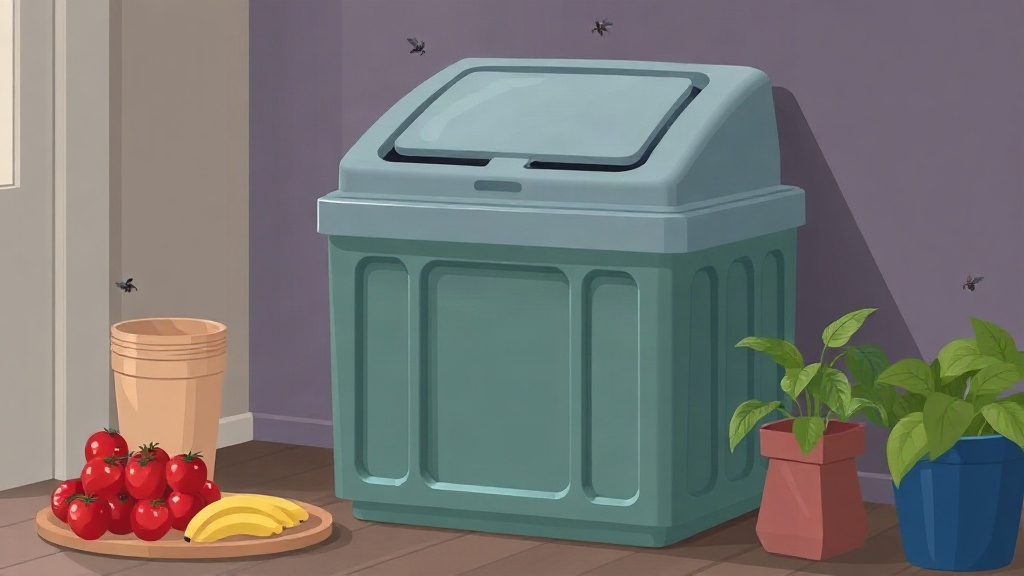
Letting the problem run has consequences that reach past the kitchen counter. Fruit flies reproduce quickly — a single female can lay hundreds of eggs in her short lifetime — so a small annoyance becomes an infestation within a week or two. Once they settle into drains, recycling bins, and houseplants, clearing them out takes far more effort than preventing them.
Odor affects more than comfort. A smelly bin gets pushed into a corner, emptied less often, or abandoned entirely. That is the real cost: people quit composting because of a problem that has a simple solution. Fixing the bin protects the habit you started.
Health and hygiene considerations
Fruit flies move between garbage, compost, and uncovered food. That makes them a genuine hygiene concern, especially in homes with young children or anyone with a weakened immune system. A sealed, balanced bin removes that pathway. Odor from anaerobic decay also attracts other pests, including cockroaches and mice, in ways a clean bin does not.
Protecting your kitchen and your habit
A countertop bin that smells forces a choice: keep composting and live with it, or stop. Neither is good. A working bin sits quietly on the counter, gets emptied on schedule, and produces finished compost you can actually use. The fix is what keeps that cycle going.
When to consider a different bin design
Some bins fight you. Models without a carbon filter, a tight gasket, or any ventilation tend to trap moisture and smell. If you have tried the basic fixes and the bin still fails, a design with a filter and better sealing may cost less frustration than repeated cleaning. That trade-off is worth weighing honestly.
A sealed bin keeps flies out; a ventilated bin lets moisture escape. Good countertop designs manage both with a filter that allows airflow while blocking insects. If your bin has neither feature, that limitation explains a lot.
The takeaway: fixing the bin protects your health, your kitchen, and your commitment to composting.
Best practices
These habits keep a countertop bin working with minimal effort. Most take seconds and become automatic within a week.
Manage moisture with dry browns
Keep a small container of dry material next to the bin — shredded paper, sawdust, torn cardboard, or dry leaves. Add a handful after every deposit to cover fresh scraps. This absorbs liquid, reduces smell, and hides food from flies. Aim for roughly one part browns to two parts food scraps by volume.
Seal, empty, and clean on a schedule
Empty the bin every two to three days, before contents start to break down. Wipe the rim and lid each time, since residue there is a favorite landing spot. Wash the bin itself weekly with hot water and mild soap, then dry it fully before refilling. A dry bin resets the clock on both problems.
Handle scraps before they go in
Chop large pieces so they break down faster and pack less densely. Drain liquid from melon rinds and citrus before adding them. Keep meat, fish, dairy, and oily foods out of a countertop bin; they smell strongly and attract pests quickly. Freeze smelly scraps until collection day if your service accepts them.
Set up a simple fruit fly trap as backup
A small dish of apple cider vinegar with a drop of dish soap catches stray flies without chemicals. Place it near the bin, not inside it. Replace it weekly. This does not fix the source, but it reduces the population while your new habits take effect.
Comparison: countertop bin setups.
| Setup | Fly risk | Odor risk | Effort |
|---|---|---|---|
| Open bowl, no lid | High | High | Low |
| Sealed bin, no browns | Low | High | Low |
| Sealed bin with filter and browns | Low | Low | Moderate |
| Sealed bin, browns, emptied every 2 days | Low | Low | Moderate |
Notice that sealing alone stops flies but not odor. Moisture control is what addresses smell, so you need both.
The takeaway: dry browns, a tight lid, and a short emptying cycle do most of the work.
Common mistakes to avoid
Most failed fixes come from the same short list of errors. Check whether any of these describe your routine.
Adding wet scraps without balancing them
Dropping coffee grounds, fruit peels, and vegetable trimmings into the bin day after day without browns creates a wet, airless mass. This is the single most common cause of odor. If your bin contents look like soup rather than damp confetti, add browns and stir.
Ignoring the lid and rim
A lid that sits slightly askew, or a rim with dried residue, is an open door for fruit flies. Check the seal after every use. Wipe the rim weekly even if it looks clean, because a thin film of juice is enough to attract flies.
Letting the bin sit too long
Waiting until the bin is full means scraps have been decomposing for a week or more. Odor builds, flies gather, and emptying becomes unpleasant. Empty on a fixed schedule instead of waiting for fullness.
Storing the bin in a warm spot
Heat speeds up decomposition and fly reproduction. A bin next to the stove or in direct sunlight will smell sooner than one in a cooler corner. Move it if you can.
Masking odor instead of fixing it
Baking soda, sprays, and charcoal sachets absorb some smell, but they do not address moisture or exposure. Use them as support, not as the solution.
The takeaway: the fix is about removing causes, not covering symptoms.
FAQ
How long does it take to get rid of fruit flies after fixing the bin?
Most flies disappear within three to seven days once the food source and breeding sites are gone. Empty the bin, clean it thoroughly, and set a vinegar trap. Any flies still emerging are usually coming from drains or recycling, so check those too.
Do I need to buy a new bin to solve this?
Not usually. A tight-fitting lid, a carbon filter, and consistent browns solve most cases. Replace the bin only if the seal is broken or the design traps moisture with no filter option. Try the free fixes first.
Is it safe to keep composting if the bin smelled bad?
Yes, once the cause is corrected. Anaerobic scraps are unpleasant but not dangerous to handle with gloves. Clean the bin, adjust moisture, and resume. Avoid using unfinished, foul-smelling compost on edible plants until it has fully cured.
How often should I empty an indoor compost bin?
Every two to three days for a small countertop bin, or sooner in warm weather. Daily emptying is fine if you cook often. A fixed schedule beats waiting until the bin is full.
Can I compost citrus and onions if flies are a problem?
Yes, in small amounts and buried under browns. Strong-smelling scraps are not the main fly driver; exposed, wet food is. Chop them small and cover them well.
Conclusion
The indoor compost bin attracting fruit flies and smelling bad fix comes down to three levers: keep the bin dry with browns, keep it sealed, and empty it every few days. Those habits remove the moisture and exposed food that flies and odor-causing bacteria need. Most kitchens see improvement within a week.
Start with one change today: put a container of shredded paper beside the bin and add a handful after every deposit. Then set a reminder to empty and wipe the bin twice weekly. That small routine is usually all it takes to keep countertop composting clean, quiet, and worth continuing.