Imagine the joy of unwrapping a gift. The paper crinkles. Ribbons flutter. But what happens next? That festive paper often ends up in the trash. It joins mountains of waste that harm our planet. Now picture this instead. You hand over a present wrapped in soft, colorful fabric. Your friend unties a simple knot. The cloth reveals the surprise. Best part? They reuse that same fabric for their next gift. This simple switch sparks joy and cuts waste.
Sustainable gift wrapping with fabric changes everything. It draws from old traditions like Japan’s furoshiki method. You wrap items in reusable cloth squares. No tape. No scissors. Just elegant folds and ties. This approach saves resources. It adds a personal touch. And it fits right into today’s push for eco-friendly living.
Recent data shows why this matters. The U.S. Environmental Protection Agency notes that households generate 25% more trash during the holidays. That’s an extra 25 million tons of waste each year. Much of it comes from non-recyclable wrapping paper coated in plastic or glitter. In the UK, people discard around 125,000 tonnes of plastic wrapping for food alone over the festive period, according to consumer group Which?. These stats come from government and academic sources. They highlight the urgent need for change. Fabric wrapping offers a smart fix. It reduces landfill clutter. It lowers carbon emissions. And it lets you celebrate with style.
In this guide, we dive deep into sustainable gift wrapping ideas with fabric. You learn practical steps. You get creative tips. And you discover ways to make every present count. Ready to wrap smarter? Let’s go.
Why Switch to Fabric for Gift Wrapping?
You love giving gifts. But traditional wrapping creates problems. Shiny papers and plastic bows look pretty. Yet they pile up fast. Most end up in landfills. They take years to break down. This waste strains our environment. It pollutes soil and water. It releases greenhouse gases.
Fabric changes that story. You choose reusable cloths like cotton scraps or scarves. These materials last for years. One cloth wraps dozens of gifts over time. Studies back this up. A 2019 report from Stanford University points out that if every U.S. family wrapped just three gifts in reused materials, they could save enough paper to cover 45,000 football fields. That’s a huge win.
Fabric wrapping boosts the environment in key ways. It cuts deforestation. Traditional paper comes from trees. Fabric reuses what you already own. It saves energy, too. Producing new wrapping paper burns fossil fuels. Reusing cloth skips that step. Plus, natural fibers like organic cotton biodegrade if they wear out.
But the perks go beyond green benefits. Fabric adds charm. Think vibrant patterns from old saris or soft linens in holiday hues. Your gifts stand out. They feel thoughtful. Recipients notice the effort. They often keep the wrap as a bonus item. A scarf becomes neckwear. A towel serves in the kitchen.
Cost plays a role here.
You invest once in quality fabric. Then you save year after year. No more buying rolls of paper that tear easily. Research from the Global Green Packaging Survey in 2022 shows 68% of consumers now pick eco-friendly options. They value brands and people who lead the way. By choosing fabric, you join that movement. You inspire others.
Consider a real example.
Sarah, a busy mom from Seattle, switched to fabric wraps three years ago. She started with old pillowcases. Now she has a collection of furoshiki cloths. “My kids fight over who gets which pattern,” she says. Her holiday waste dropped by half. Friends ask for tutorials. Small changes ripple out.
Fabric wrapping fits any occasion. Birthdays. Weddings. Holidays. It works for all ages. Kids love the untying game. Adults appreciate the elegance. And it teaches sustainability. You show loved ones how easy green choices can be.
In short, fabric wrapping solves real problems. It protects the planet. saves money. It spreads joy. Next, we explore the history that makes this method timeless.
The Timeless Tradition of Furoshiki and Fabric Wrapping
Stories connect us. And the tale of fabric wrapping starts centuries ago. In Japan, furoshiki dates back to the 8th century. People used these square cloths to bundle clothes for public baths. The name means “bath spread.” Over time, it evolved. Samurai wrapped swords in furoshiki. Merchants carried goods. Today, it wraps gifts with grace.
This method spread worldwide. It inspired eco-crafters everywhere. You see echoes in Indian sari wraps or African kente cloth bundles. Each culture adds its flair. But the core stays simple. Use a cloth to hold, carry, and present items. No waste. Just reuse.
Furoshiki shines in modern times. Japan’s government promotes it to fight plastic use. In 2020, they banned free plastic bags. Furoshiki sales jumped 20%. People rediscover this art. It cuts holiday trash. It honors heritage.
Why does it endure? Versatility.
One cloth wraps boxes, bottles, or books. You tie knots for security. Folds create patterns. No skills needed at first. Practice builds mastery. Soon, you craft intricate designs.
Take Hiroshi, a Tokyo artisan. He teaches furoshiki classes. “It’s more than wrapping,” he shares. “It’s mindfulness. Each tie slows you down. You focus on the gift inside.” His students include busy pros. They find calm in the process. One wrap takes five minutes. Yet it feels meditative.
Global trends echo this. In 2025, sustainable packaging hits $400 billion, per Smithers Pira reports. Fabric leads the charge. Brands like Wrag Wrap turn recycled bottles into cloths. Each piece saves 12 plastic bags from landfills. Carbon footprint drops 70% versus polyester.
You don’t need fancy tools.
Start with household fabrics. Old shirts. Tea towels. Scarves from thrift shops. Cut squares if needed. Hem edges for neatness. Or leave raw for rustic charm.
This tradition teaches lessons. Reuse builds community. You pass clothes among friends. One family’s wrap becomes another’s treasure. It fosters sharing. It reduces buying. And it connects you to history.
As we wrap up this section, remember: furoshiki isn’t just a technique. It’s a mindset. It values what lasts. Now, let’s pick the right fabrics for your wraps.
Choosing the Perfect Fabrics for Eco-Friendly Wraps
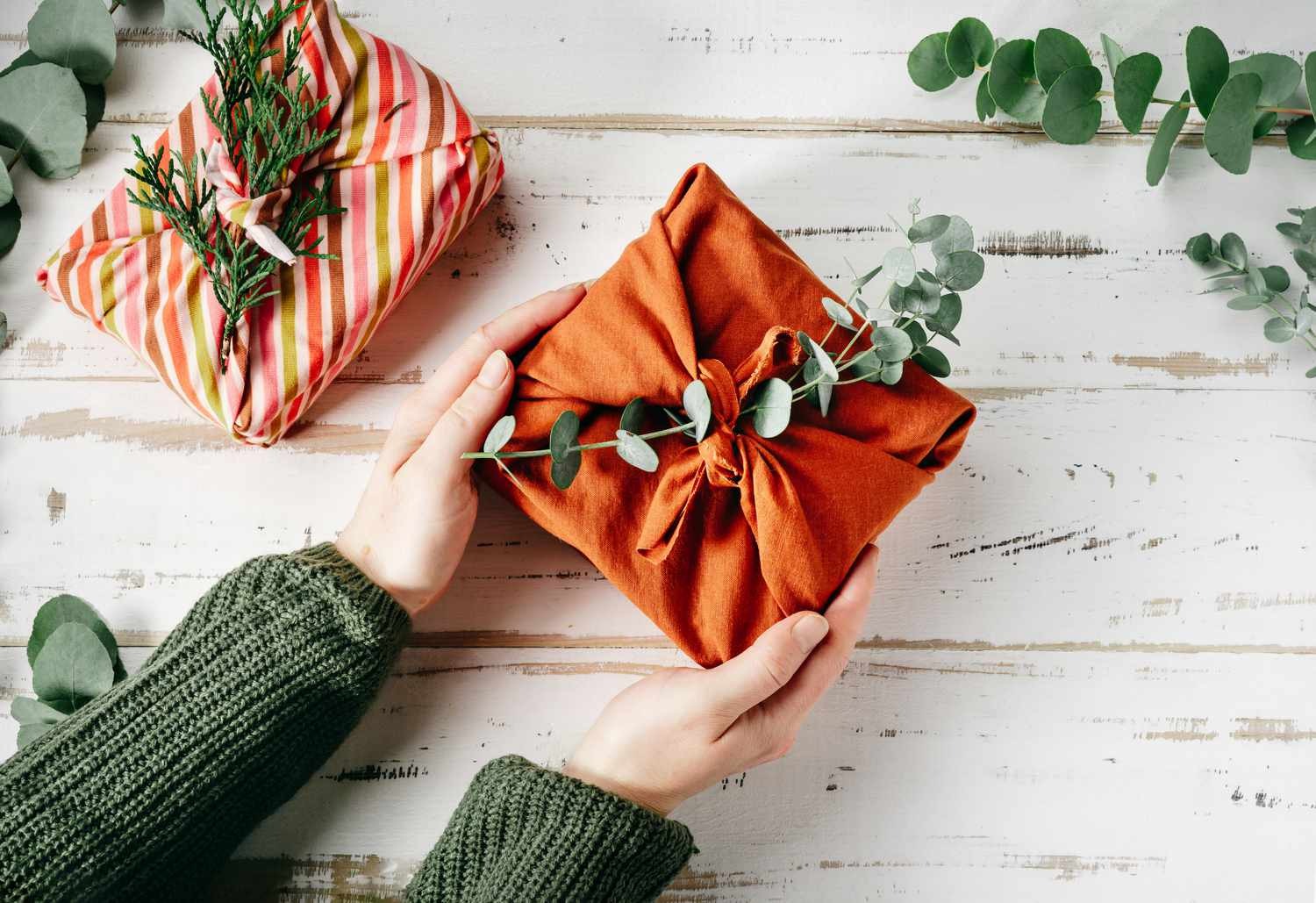
Fabrics make or break your wrap. Pick wisely. You want durability. Beauty. And low impact. Start with natural fibers. Cotton tops the list. It’s soft. Strong. And breathable. Organic versions shine. They skip harsh chemicals. Hemp follows closely. It’s tough. Grows fast. Needs little water.
Avoid synthetics like polyester. They shed microplastics. They harm the oceans. Stick to reusables. Look for GOTS certification. It ensures fair labor and clean processes.
Size matters. For small gifts like jewelry, grab 18-inch squares. Medium boxes need 28 inches. Large items? Go 45 inches or more. Measure diagonally. It should triple your gift’s longest side.
Patterns add fun. Solids work for minimal looks. Prints bring personality. Floral for spring. Geometrics for modern vibes. Upcycle what you have. Old curtains. Vintage linens. They tell stories.
Color plays a role. Neutrals like beige or sage fit any theme. Bolds like red pop for holidays. In 2025 trends, pastels rule. Think soft blues with metallic accents. They feel fresh. Luxe.
Where to source? Thrift stores overflow with options. Garage sales yield gems. Online, check ethical sites. Ten Thousand Villages sells upcycled sets. Each supports artisans.
Quality test. Tug edges. It should hold its shape. Wash first. It removes dust. Sets dyes.
A case study: Eco brand Wrappr uses organic cotton bags. Customers reuse them hundreds of times. One user wrapped 50 gifts last year. Zero waste. Satisfaction.
Choose fabrics that spark joy. They elevate your gifts. Make recipients smile. Now, gather your squares. Time to learn the wraps.
Step-by-Step Furoshiki Wrapping Techniques
Master furoshiki. It unlocks endless possibilities. We break it down. Start simple. Build skill. Each method suits different shapes.
Basic Box Wrap: Otsukai-tsutsumi Style
This handles square or rectangular gifts. Like books or candles.
- Lay your fabric flat. Diamond shape. Corners point up, down, left, and right.
- Place the gift in the center. Align with the middle.
- Fold the bottom corner up. Cover half the gift. Smooth it flat.
- Fold the top corner down. Meet the bottom fold. It overlaps slightly.
- Bring the left corner over. Tuck under the gift. Create a diagonal wrap.
- Do the same with the right. Pull tight. Tie ends in a square knot.
- Adjust folds. Fan out for beauty.
Done in two minutes. Secure without tape. Reuse forever.
Bottle or Cylinder Wrap: Kome-tsutsumi
Perfect for wine or jars.
- Position fabric diamond-style.
- Set the bottle diagonally. Neck toward one corner.
- Fold the bottom corner up. Wrap around the base. Twist excess.
- Fold sides in. Like envelope flaps. They hug the sides.
- Pull the top corner down. Cover the neck. Tie with side ends.
- Double knot at the top. Leave tails for a bow.
- Stand it upright. It looks polished.
This method grips curves. No slipping.
Flat Item Wrap: Zentsuki-shibori
Ideal for cards or frames.
- Fabric flat. Diamond orientation.
- Place the item center. Parallel to edges.
- Fold the bottom up. Just past halfway.
- Fold the top down. Overlap the bottom.
- Tie the left and right corners. Simple overhand knot.
- Pull tight. It pleats naturally.
- Fluff the knot. Add a sprig of greenery.
Quick and flat. Saves space under the tree.
Practice these. Use scrap first. Watch videos for visuals. Soon, you improvise. Mix techniques. Create signatures.
One tip: Iron fabrics. Wrinkles distract. Store folded. Ready for next time.
These steps build confidence. They make wrapping fun. Not frantic. Let’s add flair next.
Creative Ideas: Upcycled and Themed Fabric Wraps
Fabric begs for creativity. Upcycle odds and ends. Turn trash into treasure. Here, we share ideas. Tailored for seasons. Infused with personality.
Start with upcycled saris. These Indian textiles glow with color. Cut into squares. Wrap jewelry. The shimmer delights. Recipients wear it as scarves. Double gift.
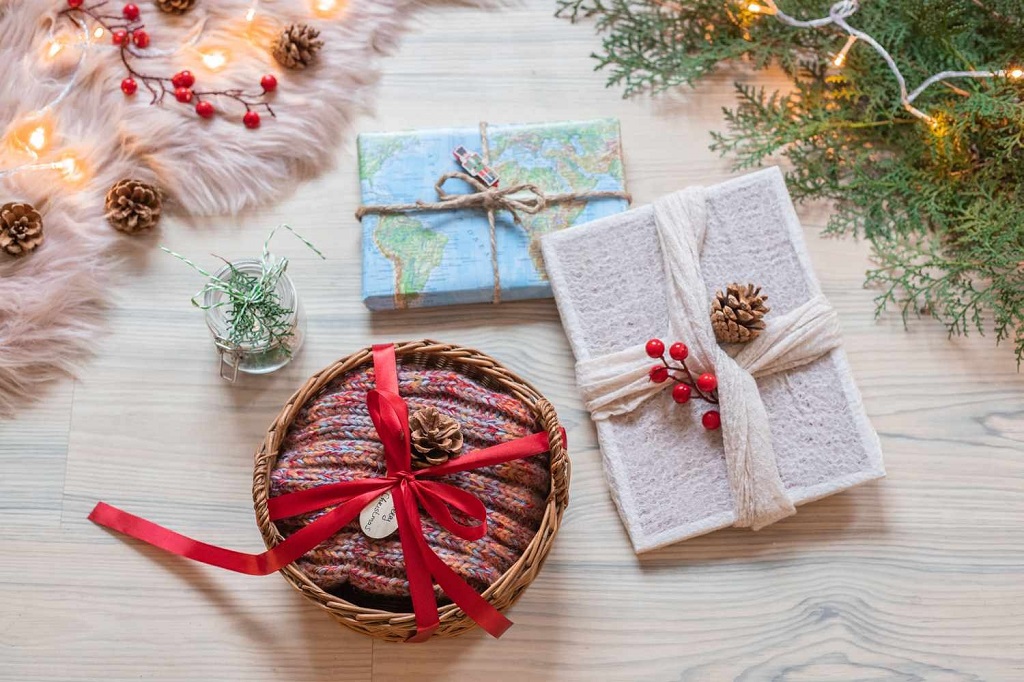
Holiday theme? Red and green flannel from old shirts. Wrap mugs. Add pinecone accents. Tie with twine from garden string. Rustic charm blooms.
For kids, comic print fabrics. Upcycle pillowcases. Wrap toys. They unroll like adventures. Laughter follows.
Birthday bash? Polka-dot tea towels. Wrap baked goods. The cloth doubles as picnic gear. Practical joy.
Wedding? Lace scraps from dresses. Delicate wrap for candles. It whispers elegance.
Eco twist: Denim from jeans. Tough for tools or books. Fringe edges for a boho vibe.
Layer textures. Mix linen and velvet. Soft meets crisp. Visual pop.
Personalize. Embroider initials. Stamp motifs with potatoes. Your touch shines.
Case in point: Community group in Portland. They swap upcycled wraps yearly. One event yielded 200 zero-waste gifts. Participants bonded over shares.
Seasonal list:
- Winter: Wool blends for warmth. Wrap socks. Cozy factor high.
- Spring: Floral cottons. Wrap seeds. Plantable bonus.
- Summer: Light linens. Wrap beach reads.
- Fall: Burlap sacks. Wrap spices. Earthy tones.
Themed bullets:
- Vintage: Old maps as liners under cloth. Wrap travel books.
- Minimal: White muslin. Single twine tie. Clean lines.
- Bold: Batik prints. Wrap art supplies.
Upcycle challenges spark ideas. Raid closets. Donate extras. Less stuff. More meaning.
These concepts fuel your style. They keep wraps fresh. Now, pair with natural add-ons.
Natural Embellishments: Greenery, Twine, and More
Fabric wraps shine plain. But touches elevate. Go natural. Skip plastic ribbons. Embrace Earth’s gifts.
Twine leads. Jute or hemp cords. Rough texture contrasts with soft cloth. Tie bows. Loop around twice. Simple strength.
Greenery next. Pine sprigs for holidays. Dried lavender for calm. Forage ethically. Rinse well. Tuck into knots. Scent surprises.
Dried flowers add color. Pressed petals. Glue-free. They fade gracefully.
Pinecones cluster. Glue to tags. Rustic anchors.
Orange slices. Dehydrate. String on twine. Citrus burst.
For sparkle, metallic threads. Recycled gold yarn. Subtle shine.
Avoid tape. Folds and ties hold all.
Example: Holiday market in Berlin. Vendors used eucalyptus on linen wraps. Shoppers raved. Sales doubled. Nature sells.
Quick list of pairings:
- Basil leaves on green cotton. Herb garden gift.
- Cinnamon sticks with burlap. Spice jar wrap.
- Acorn toppers for brown linen. Autumn books.
- Seashells on blue voile. Beach towel bundle.
- Feathers from crafts. Light scarf wrap.
These bits last. Compost when done. Zero trace.
Embellish with heart. It shows care. Your gifts glow.
Benefits Backed by Data: Why Fabric Wins
Numbers don’t lie. Fabric wrapping outperforms paper. Let’s review the evidence.
Waste reduction tops. U.S. dumps 2.3 million pounds of wrapping paper yearly, per Ecology Center. Half ends up in landfills. Fabric? Reusable. One cloth replaces 100 sheets.
Carbon savings follow. Greenpeace research shows 1kg of wrapping paper emits over 3kg of CO2. Fabric skips production. Reusing cuts emissions 90%, says UN Environment Programme.
Health perks, too. No toxic inks or plastics. Soy-based stamps are optional. Safer for kids.
Economic edge. Initial buy: one set of clothes. Long-term: free wraps. A 2023 SDSU study notes reusable options save families $50 yearly on supplies.
Social good. Upcycled fabrics support artisans. Fair trade boosts communities.
2025 trends confirm. 47% of brands now offer biodegradables, per Straits Research. Fabric leads.
Real impact: Canadian initiative. Wrapped 10,000 gifts in cloth. Diverted 500kg of waste. Inspired city ordinance.
Data proves it. Fabric wraps smart. They heal. They save. Integrate into routines next.
Integrating Fabric Wrapping into Your Routine
Habits form slowly. Start small. Build steadily.
Stock a bin. Dedicate space. Fill with clothes. Tags. Twine. Easy access.
Plan. Sort gifts by size. Match fabrics. Saves time.
Involve family. Kids tie knots. Teens pick patterns. Shared fun.
Host swaps. Trade wraps with friends. Builds a collection.
Track wins. Note saved paper. Share stories. Motivates.
Seasonal prep. Wash cloths pre-holidays. Iron crisp.
Travel tip: Roll small wraps. Pack light.
Routine deepens joy. Wrapping becomes a ritual. Not chore.
One family in Vancouver. Weekly wraps for birthdays. Waste zero. Bonds tight.
Ease in. Consistency counts. Your planet thanks you.
Related Topics: Guide to Building a DIY Green Egg Table
Conclusion
Sustainable gift wrapping with fabric transforms traditions. You cut waste. Honor heritage. Add beauty. From furoshiki folds to upcycled saris, options abound. Data shows real change. 25% less holiday trash. Lower emissions. Happier givers.
Key takeaways: Pick natural fibers. Practice basic ties. Embellish naturally. Reuse endlessly.
Start today. Grab a scarf. Wrap one gift. Feel the difference. Share your wraps. Inspire others. Your small step greens the world. Happy wrapping!
Related Topics: Eco-Friendly Plant Food
FAQs
What fabrics work best for sustainable gift wrapping?
Cotton, hemp, and linen top the list. They hold shape. Reuse well. Opt for organic to skip chemicals. Upcycled options like old scarves add charm without new buys.
How do I get started with furoshiki wrapping?
Lay cloth diamond-style. Place the gift center. Fold corners up and tie. Practice on boxes first. Tutorials online help. It takes minutes once you try.
Can I upcycle old clothes for fabric wraps?
Yes! Cut shirts or jeans into squares. Hem if you like. Denim suits sturdy gifts. Flannel fits holidays. This keeps textiles out of landfills.
Are fabric wraps suitable for all gift shapes?
Mostly. Boxes easy. Bottles need cylinder ties. Odd shapes? Layer folds. Adjust size. Versatility makes it fun.
How does fabric wrapping reduce environmental impact?
It skips single-use paper. Reuses cut production needs. One cloth saves trees and energy. Studies show big wins in waste diversion.